
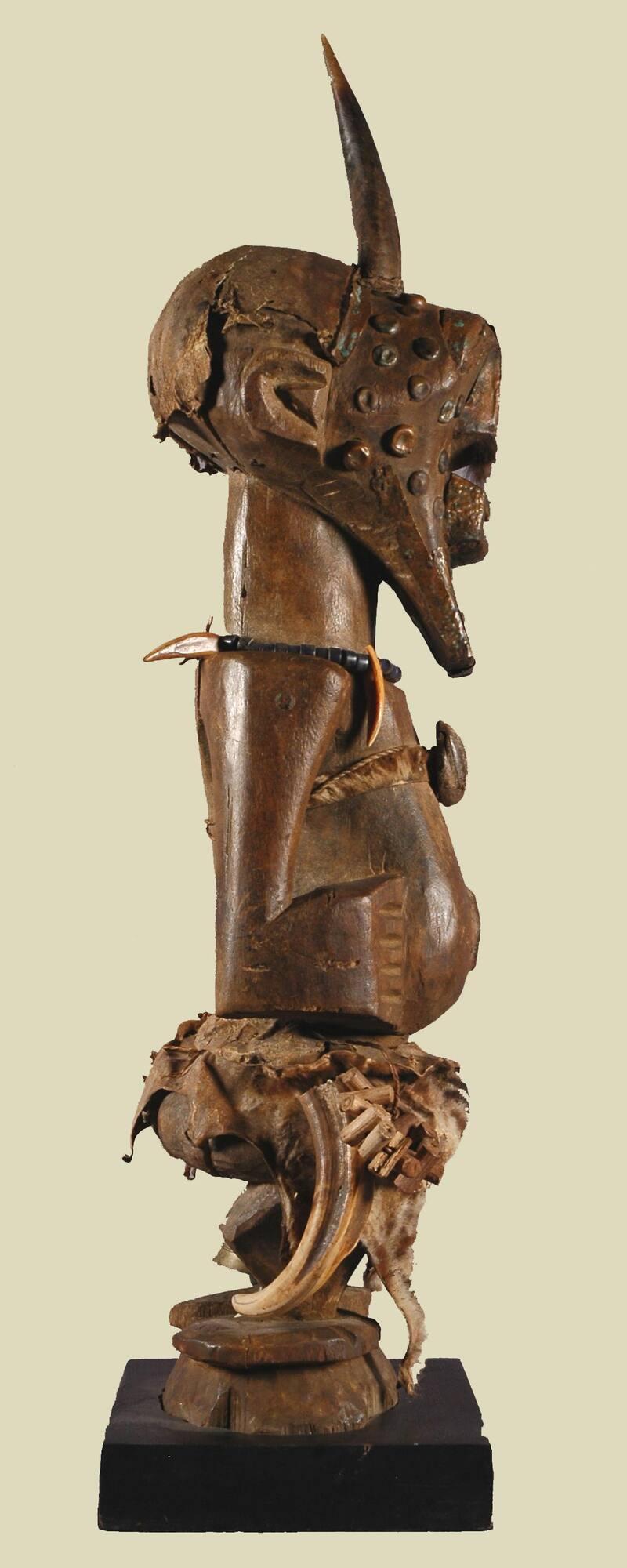
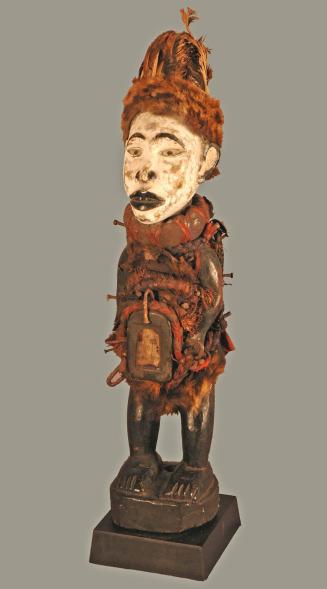
Power Figure (Nkishi)
Artist/Maker
Songye peoples
, Zaire
Date20th century
MediumWood, animal horn and hide, and bronze bells
DimensionsOverall: 34 × 10 × 9 in. (86.4 × 25.4 × 22.9 cm)
Overall ((with base)): 37 × 10 1/4 × 9 in. (94 × 26 × 22.9 cm)
Overall ((with base)): 37 × 10 1/4 × 9 in. (94 × 26 × 22.9 cm)
Credit LineGift in honor of Alexandra Gould (OC 2011)
Object number2011.26.41
Status
Not on viewThe overwhelming majority of Songye figural sculptures were created with the intent of influencing the forces of nature through the powers residing in the carved image. Called nkishi by the Songye (minkishi in plural), these figures were made to protect and aid the individual, family, or community.
Minkishi were created by the Songye in several sizes. The largest and most notable were figures for the benefit of an entire village or community and were over a meter in height. Such figures were considered dangerous by the community and handled only by ritualists who had experience with the powerful forces at work in the figures. Often community figures were entrusted with the task of protecting or increasing fecundity in the village and for keeping epidemic illness away.
By contrast, the figures created for individuals or families were made by a ritualist to remedy a specific problem or ailment such as an illness or unsuccessful period of hunting or farming.
To the Songye, the figure was simply the receptacle of the active ingredients, called bijimba, that would be added to the image by a ritualist. In most cases, these ingredients were disparate organic and inorganic materials, referencing the power of their source via sympathetic magic; parts of birds of prey, arrowheads, and stones or dirt from a grave of a notable trapper may go into the charm material of an nkishi used to increase the success of the hunt, for example. Once completed, the charm would be inserted into cavities in the figure’s head or abdomen, or wrapped around the figure in small bundles often made of reptile skin.
Once the figure was no longer deemed efficacious, it would be disposed of. Often the charm would be removed and destroyed by a ritualist, leaving only the carved figure, which now had no value to the Songye since it no longer had any functional purpose. The majority of Songye figures that have found their way to the West are in this condition.
ProvenanceGerald Dannenberg; purchased by Mohammed Kaba; acquired by Peter G. Gould and Robin M. Potter, Haddonfield, NJ; by gift 2011 to Allen Memorial Art Museum, Oberlin, OHExhibition History
Minkishi were created by the Songye in several sizes. The largest and most notable were figures for the benefit of an entire village or community and were over a meter in height. Such figures were considered dangerous by the community and handled only by ritualists who had experience with the powerful forces at work in the figures. Often community figures were entrusted with the task of protecting or increasing fecundity in the village and for keeping epidemic illness away.
By contrast, the figures created for individuals or families were made by a ritualist to remedy a specific problem or ailment such as an illness or unsuccessful period of hunting or farming.
To the Songye, the figure was simply the receptacle of the active ingredients, called bijimba, that would be added to the image by a ritualist. In most cases, these ingredients were disparate organic and inorganic materials, referencing the power of their source via sympathetic magic; parts of birds of prey, arrowheads, and stones or dirt from a grave of a notable trapper may go into the charm material of an nkishi used to increase the success of the hunt, for example. Once completed, the charm would be inserted into cavities in the figure’s head or abdomen, or wrapped around the figure in small bundles often made of reptile skin.
Once the figure was no longer deemed efficacious, it would be disposed of. Often the charm would be removed and destroyed by a ritualist, leaving only the carved figure, which now had no value to the Songye since it no longer had any functional purpose. The majority of Songye figures that have found their way to the West are in this condition.
Engaging Spirits, Empowering Man: Sculpture of Central and West Africa
- Allen Memorial Art Museum, Oberlin, OH (February 1, 2009 - December 23, 2009 )
Collections
- African & Oceanic
The AMAM continually researches its collection and updates its records with new findings.
We welcome additional information and suggestions for improvement. Please email us at AMAMcurator@oberlin.edu.
We welcome additional information and suggestions for improvement. Please email us at AMAMcurator@oberlin.edu.
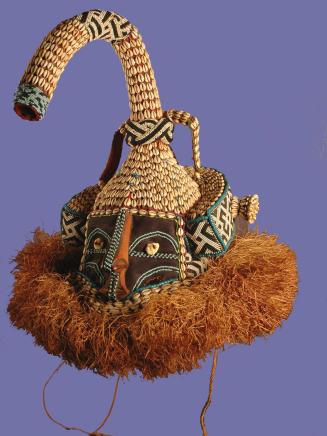
20th century
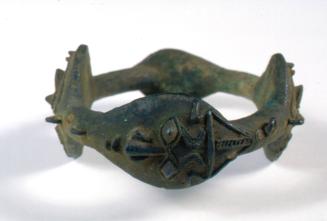
18th–19th century
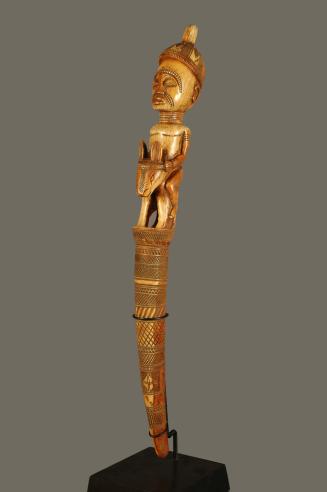
n.d.
20th century
19th century
20th century
20th century
20th century
20th century
late 19th–early 20th century